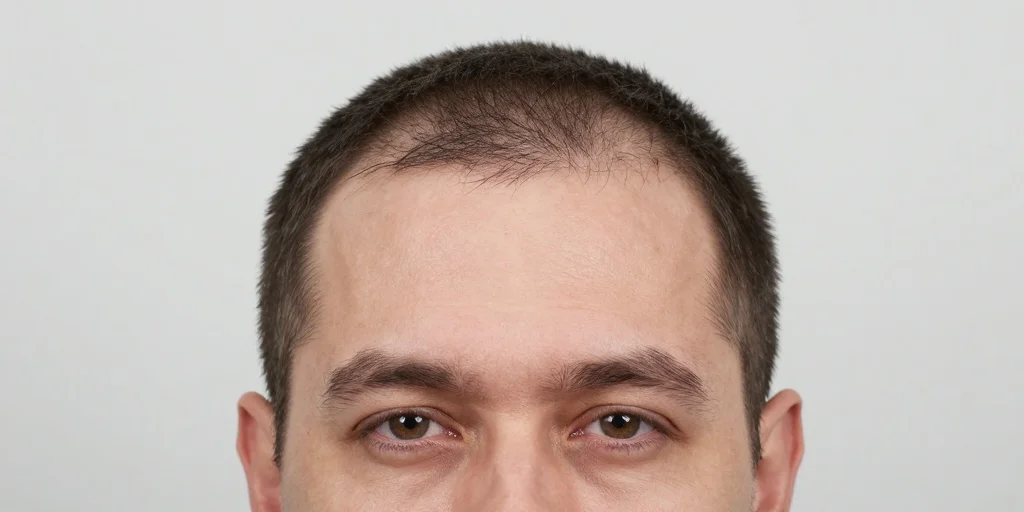
Hair transplant outcomes are not uniform across the scalp. Even when the same surgical technique, graft quality, and surgeon expertise are applied, graft survival rates, density perception, and long-term stability differ by recipient area. These differences are primarily driven by variations in vascular supply, scalp biomechanics, and hair growth patterns.¹,²
Understanding how each area responds to transplantation is essential for setting realistic expectations and planning long-term results.
Hairline (Frontal Zone) Success Rate
Average Graft Survival: Approximately 90–95%
The frontal hairline consistently demonstrates the highest and most predictable success rates in hair transplantation.
Why The Hairline Performs Best
- The frontal scalp has strong and consistent vascularity, which supports rapid revascularization of transplanted follicles.¹
- Compared to the crown, the frontal area is exposed to less scalp movement and mechanical stress, reducing early graft trauma.²
- Implantation angles are more linear and controlled, improving follicle stability and growth direction.³
Clinical Implications
High graft survival allows surgeons to achieve natural-looking density with fewer grafts, making the hairline the most cosmetically efficient area to restore.
Mid-Scalp Success Rate
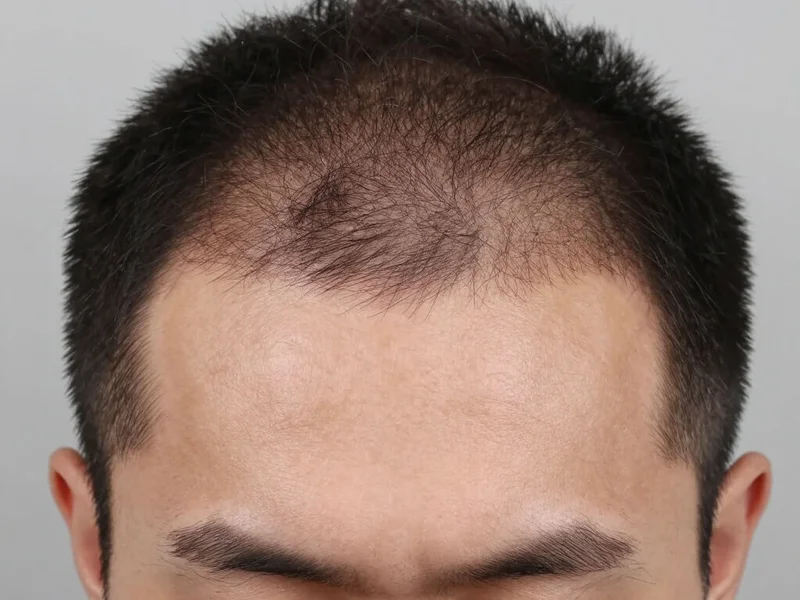
Average Graft Survival: Approximately 85–90%
The mid-scalp shows slightly lower but still high success rates, closely following the frontal zone in predictability.
Supporting Factors
- Vascular supply remains adequate for reliable graft nourishment, though marginally reduced compared to the frontal scalp.¹
- The flatter anatomy of the mid-scalp limits shear forces and reduces graft displacement.²
- Hair direction is relatively uniform, simplifying implantation and reducing transection risk.³
Clinical Implications
Mid-scalp restoration reinforces frontal density visually and plays a key role in creating a continuous, natural transition from the hairline to the posterior scalp.
Crown (Vertex) Success Rate
Average Graft Survival: Approximately 70–80%
The crown is widely regarded as the most challenging recipient area and has the lowest average graft survival rates.
Why Crown Results Are Less Predictable
- The vertex has a centrifugal blood supply pattern, making revascularization less consistent.¹
- Continuous scalp movement and pressure increase mechanical stress on grafts during early healing.²
- The spiral hair-whorl pattern requires complex angulation, increasing implantation difficulty and graft loss risk.³
Clinical Implications
The crown typically requires significantly more grafts to achieve visible density, matures more slowly, and often continues to thin over time. Secondary procedures are more common in this area.
Factors That Influence Success Beyond Location
While recipient area matters, overall outcomes are also strongly influenced by:
- Graft handling and out-of-body time¹
- Donor area quality and harvesting technique²
- Implantation depth and angle control³
- Postoperative wound care and patient compliance¹
Poor technique can compromise even high-potential areas, while conservative planning can preserve results for decades.
Find the Best Hair Transplant Clinics in Istanbul
Compare carefully selected hair transplant clinics in Istanbul, Turkey.
Review patient feedback, treatment options, and package transparency to shortlist providers with confidence.
Clinical Planning Takeaway
Evidence-based planning generally prioritizes:
- Hairline restoration
- Mid-scalp density reinforcement
- Crown restoration only if donor reserves allow
This sequence maximizes cosmetic impact while protecting long-term donor supply.²,³